
Paycell × KRAFTON
Stage, Backdrop and Technical Production
Stage design and build, backdrops, lighting, sound, LED screens and rigging for events; technical production from build to teardown.

The Stage and Technical Set Up of Your Event
The stage is where guests look most during an event. We design it for the venue, programme and audience size, prepare the drawings and load calculations, build it and take it down after the event.
Backdrops, lighting and sound design, LED screens, truss and rigging are part of this service. Stage and technical production can be commissioned on its own, separate from event management, and the equipment is also available for hire.
What We Provide in Stage and Technical Production
Stage Design
Stage design, drawings and load calculations for the venue and programme.
Stage Build
Stage platform, truss and rigging; teardown after the event.
Backdrop
Stage backdrops, press walls and printed backgrounds.
Lighting and Sound
Lighting and sound design, equipment and crew during the event.
LED Screens
LED screen installation and screen content.
Power Distribution
Power distribution for the stage and technical equipment.
Event AV Production Built Around What Happens on Stage
A leadership presentation, a panel discussion and a product reveal place different demands on the same room. Start with the running order: who speaks, which films play, how many microphones are needed at once and whether the audience will ask questions. These decisions give the technical team a useful basis for designing the system.
The venue matters just as much. Ceiling height, daylight, room shape and available power influence screen placement and lighting. A large display is useful only if people can read it from their seats. Equipment positions also need to preserve audience routes and allow the crew to see and hear the event they are operating.
Flex Event can define the production scope for a full event or a specific technical package. The proposal identifies equipment, operators, installation, rehearsal and dismantling, alongside any venue services that require separate orders. If streaming or remote speakers are involved, the additional connections, personnel and testing are agreed as part of that scope.
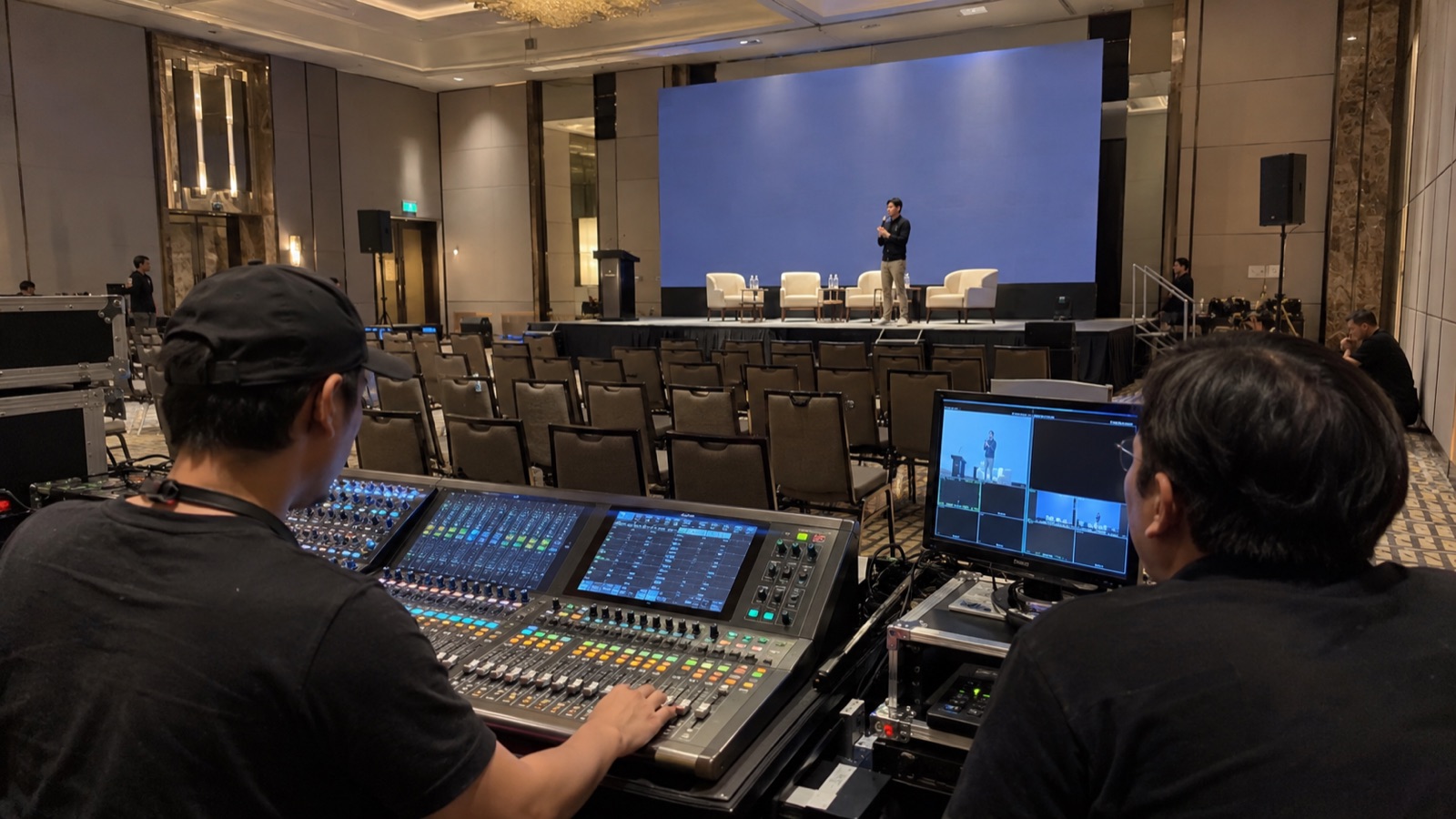
Six Elements of the Technical Production Plan
Speech and Audience Sound
Microphone choices follow the presentation format, including lecterns, moving presenters and audience questions. We plan speaker positions and operator coverage around the room. A sound check with the actual presenters helps identify handling, volume and movement issues before guests arrive.
Screens and Presentation Playback
Screen dimensions and positions are matched to content and viewing distance. We confirm presentation formats, video playback and the handover of final files. The brief identifies who collects revisions, loads the approved versions and operates the content during the event.
Stage and Room Lighting
Speakers, products and audience areas need different lighting treatments. We develop the lighting brief around visibility, atmosphere and any photography or filming requirements. Changes between presentations, discussions and performance moments are included in the cue plan instead of being improvised during the programme.
Venue Connections and Installation
Power, rigging, access times and cable routes are reviewed with the venue and the relevant technical specialists. The installation schedule allows the crew to build and test the system before rehearsal. Any required venue approvals and exclusive services are identified in the proposed work.
Rehearsal and Show Operation
We connect the running order with microphone handovers, screen changes and lighting cues. Presenters can practise entrances and key transitions with the technical team. Operator roles and communication channels are agreed so a late adjustment reaches the people responsible for delivering it.
Scope, Backup Options and Closing
The quotation explains rental periods, crew hours and what happens after the final session. Additional equipment or backup arrangements are discussed according to the importance of each element. Dismantling and collection are planned around venue access and the next activity in the space.
Event Stage Design That Works from the Audience's Seat
Begin with the moments the stage needs to support. A panel requires enough depth for chairs and clear paths between them. A signing ceremony needs a table that faces the audience and cameras. A product reveal may need concealed storage or a position where the object can remain visible after its introduction.
The design should also work from the back of the room. Screen height, speaker position and the relationship between scenic elements affect the audience's view. A backdrop that looks effective in a drawing can compete with presentation content or cast awkward shadows when it is built. Materials, lighting and screen content should therefore be reviewed together.
Flex Event can develop the concept, layout and production brief, then coordinate the agreed fabrication and installation. Designs are checked against venue conditions and the applicable technical requirements. Structural calculations, rigging and approvals are assigned to the relevant specialists; the proposal makes those responsibilities clear before production begins.
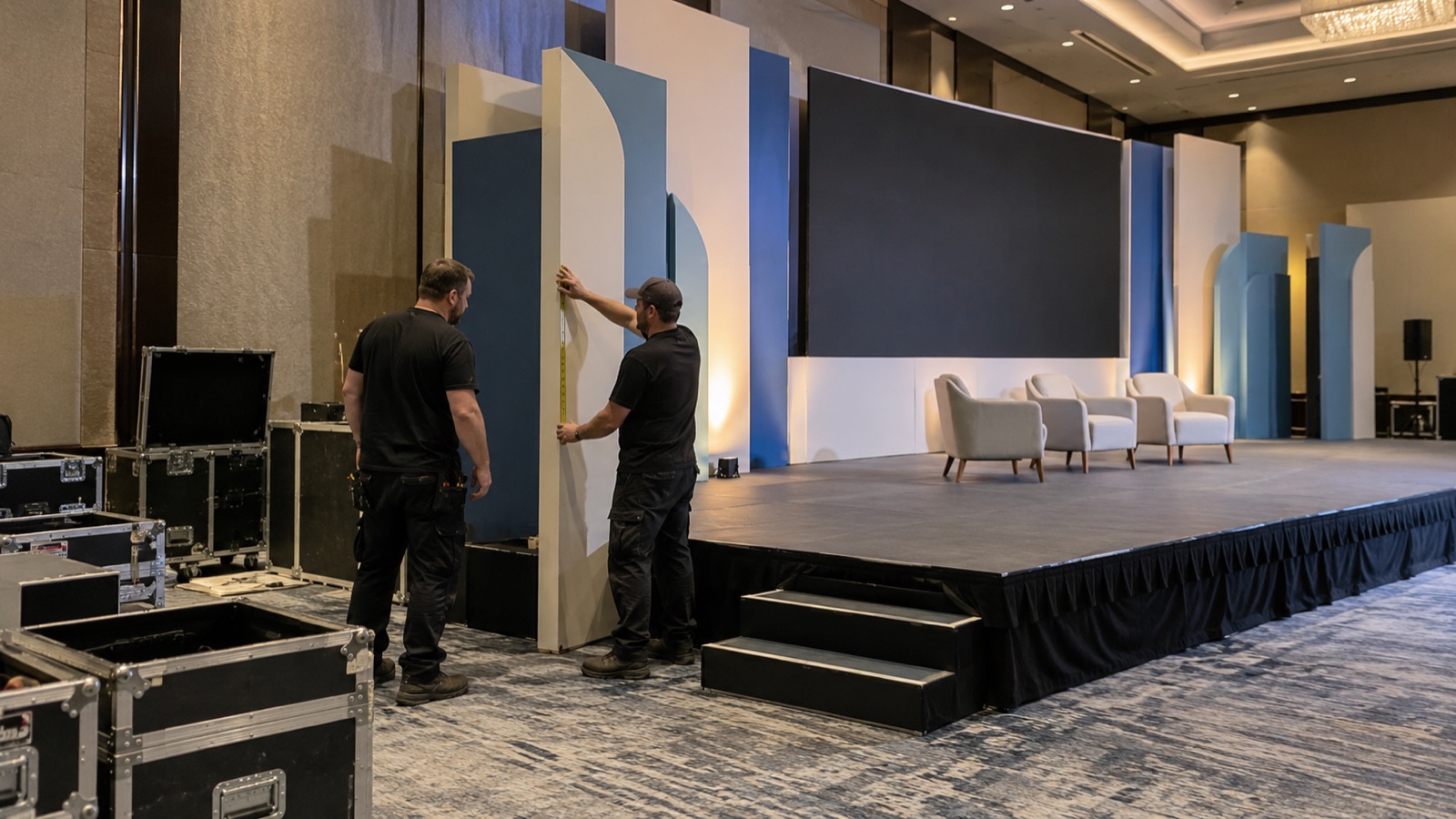
Photos
Six Parts of the Stage and Scenic Brief
Stage Footprint and Programme
We use the running order to establish the platform size, furniture positions and entrance routes. The layout accounts for the largest group appearing at once and the items brought on stage. Access requirements are discussed early so they can be integrated into the design.
Backdrops and Scenic Surfaces
Printed panels, fabric, modular walls and custom elements offer different finishes and production demands. We propose materials suited to the approved design, viewing distance and event duration. Artwork dimensions and finishing details are confirmed before the files are released for production.
Screens Within the Setting
LED screens or projection surfaces should have a clear role in the composition. We plan their relationship to presenters, furniture and decorative elements, keeping useful viewing areas unobstructed. Content dimensions and lighting requirements are shared with the technical team before the build is finalised.
Products, Furniture and Movement
A display plinth, lectern or discussion table needs to fit both the visual idea and its practical use. We consider dimensions, stability and handling with the responsible specialists. Rehearsal plans include moving furniture or products when the programme changes between sessions.
Production and Venue Installation
The build is planned around loading access, working space and available installation time. Scenic pieces may need to be assembled in sections or finished on site. Material requirements and any suspended elements follow venue approval procedures, with installation responsibilities agreed before delivery.
Finishing, Rehearsal and Dismantling
Before handover, the team reviews visible joins, print placement, lighting and sightlines. A rehearsal checks how the stage works with people using it. The closing plan identifies reusable pieces, packing requirements and removal times so the approved design also has a practical end-of-event plan.
Stage and Production Projects
League of Legends
Türkiye University Finals
Great Art Foundation
The Great Art Security Conference
Arnavutköy Municipality
Career and Employment Event 2024
Milka × NetD
Valentine's Day Concert
Millenicom
New Year Event
Contact
Send us the details of your event by email or call us.